The BasicsTypes of Movement
Every camera movement is either a change in orientation (the camera pivots in place, like pan/tilt) or a change in position (the whole camera physically travels, like a dolly or crane). Confusing the two is the most common beginner mistake — a zoom, in particular, looks superficially like a dolly but is neither.
Pan
The camera pivots left/right from a fixed base, like turning your head without moving your feet. Used to follow action or reveal what's beside the current subject.
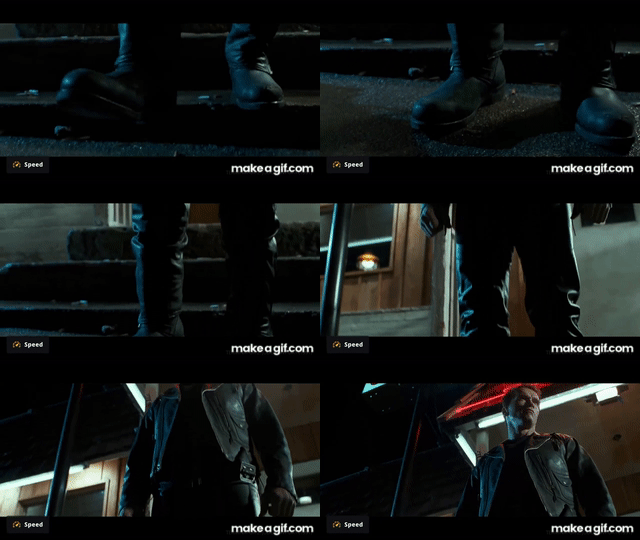
Tilt
The camera pivots up/down from a fixed base, like nodding. Often used to reveal height/scale or follow a standing/sitting action.
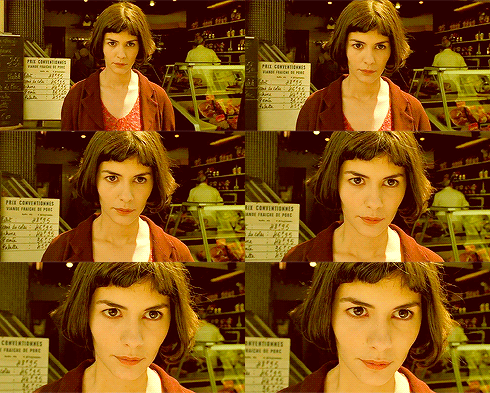
Dolly
The entire camera physically moves toward or away from the subject, typically on a wheeled cart or track. Changes perspective and depth relationships as it moves, unlike a zoom.

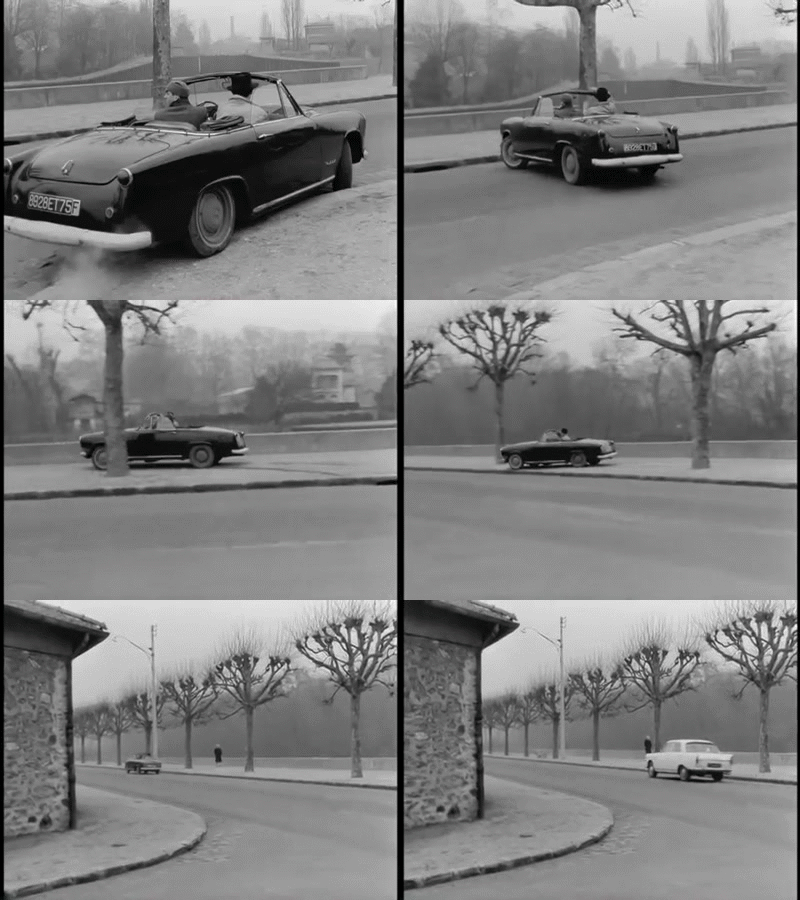
Truck / Tracking
The camera moves sideways, parallel to the subject's movement — keeps a walking or running subject framed consistently while the background scrolls past.
Pedestal
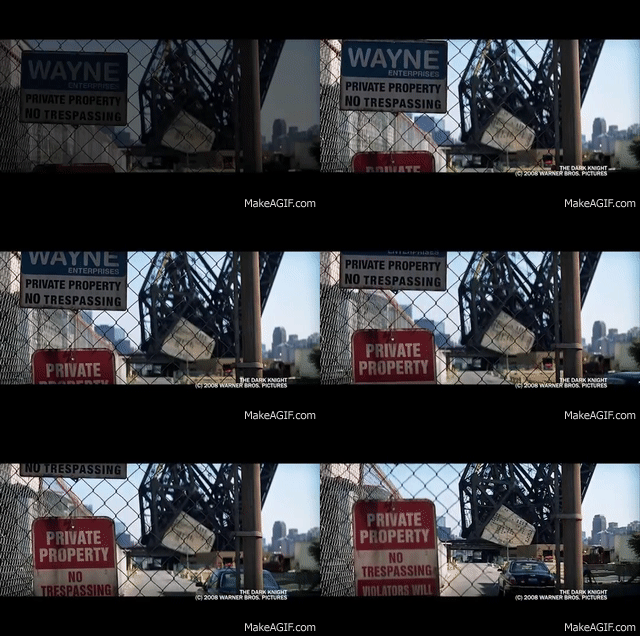
The camera rises or lowers vertically while staying level and pointed the same direction — distinct from a tilt, which pivots in place.
Zoom

The lens's focal length changes to magnify the image; the camera body itself does not move. Because perspective stays fixed, a zoom feels flatter and more "artificial" than a dolly.
Handheld
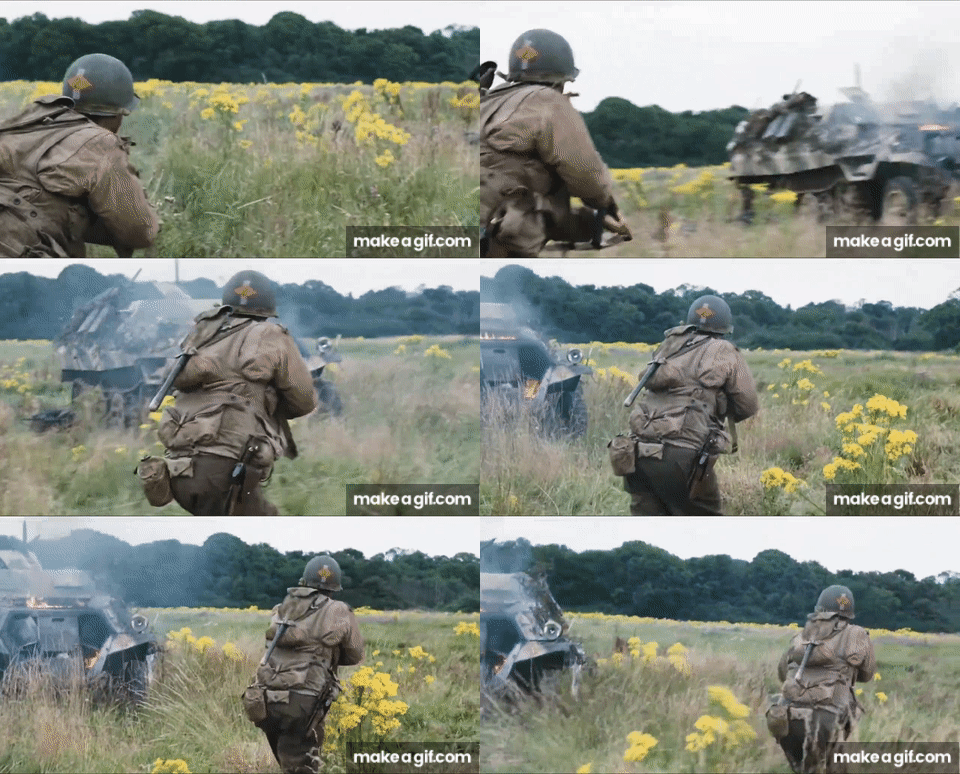
The operator carries the camera on their body. Natural sway and micro-shake reads as urgent, chaotic, or documentary-realistic.
Steadicam / Gimbal
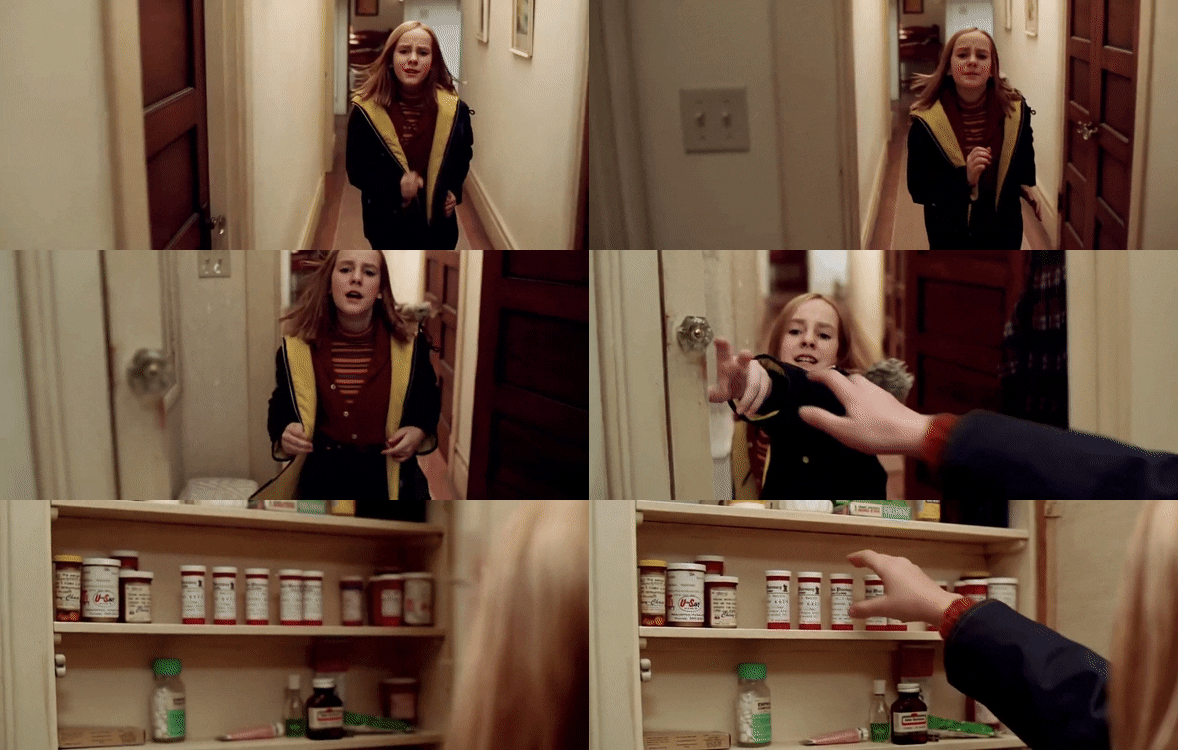
A stabilizing rig isolates the camera from the operator's body movement, allowing long, fluid, walking shots with none of handheld's shake.
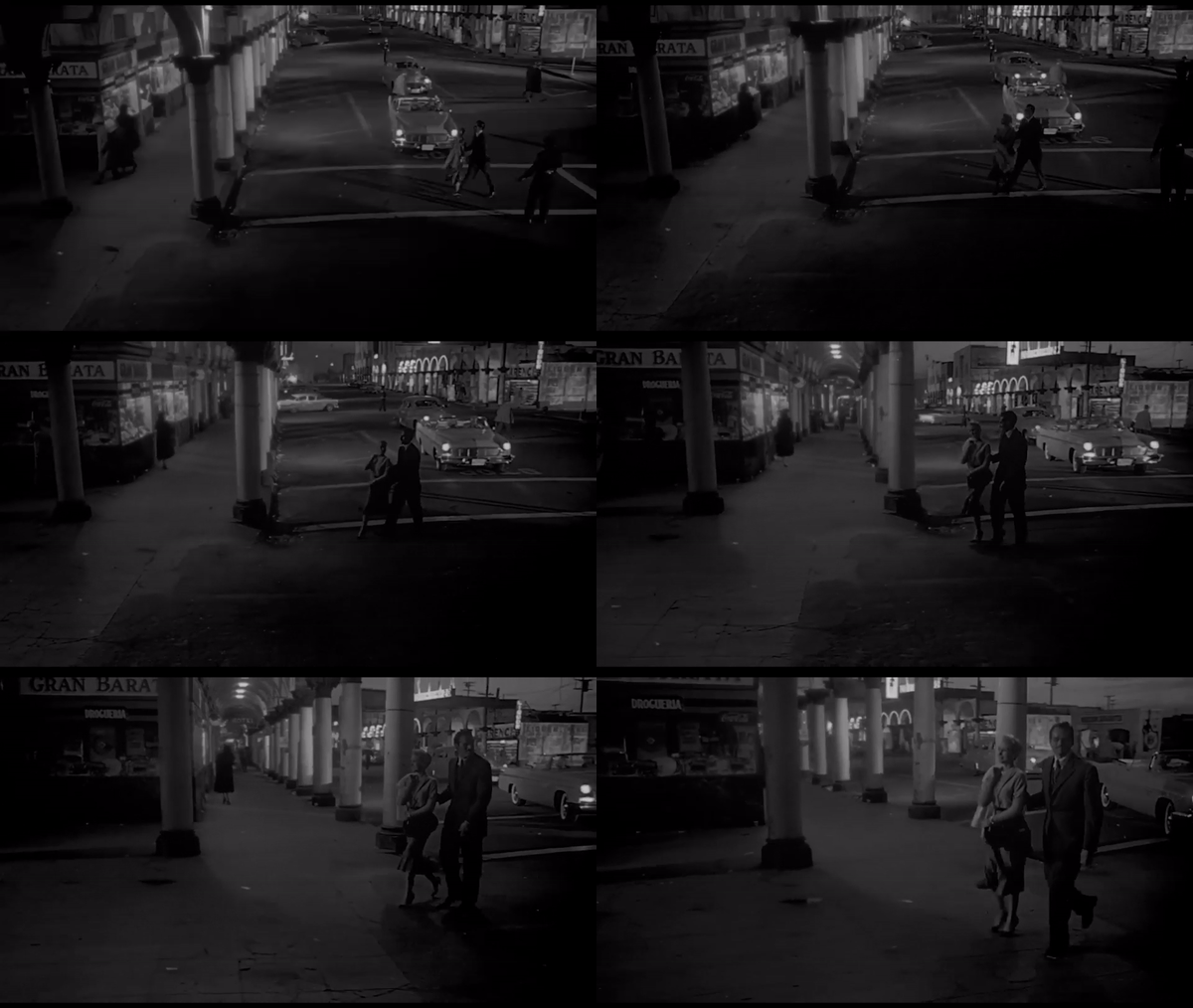
Crane / Aerial
A mechanical arm or drone lifts the camera off the ground entirely, allowing sweeping, large-scale reveals impossible from human height.
TheoryMotivated vs. Unmotivated Movement
A first-year distinction worth internalizing: motivated movement follows an in-scene reason — an actor stands up, so the camera tilts with them; a car drives away, so the camera pans to track it. Unmotivated movement has no such justification; it's a purely stylistic authorial choice, like a slow, unexplained push-in on a character sitting still. Unmotivated movement draws more conscious attention to the camera's presence and, by extension, the filmmaker's hand — used deliberately, it can build dread or emphasis, but used carelessly it just looks unmotivated in the pejorative sense: distracting.
HistoryThe Technology That Made Movement Possible
Camera movement has always been shaped by available hardware. Early sound-era cameras were bulky and loud, requiring a soundproof "blimp" housing that made fluid movement nearly impossible — a major reason early talkies (1927 onward) look visually static compared to the more mobile late-silent era that preceded them.
The dolly and crane solved this mechanically, but it wasn't until 1975 that inventor Garrett Brown patented the Steadicam, a body-worn stabilizing rig that isolates the camera from the operator's footsteps. It was first used prominently in Bound for Glory (1976) and then, famously, for the training-run sequence in Rocky (1976) and the tricycle corridors of The Shining (1980) — both cited constantly in film courses as the technology's breakthrough moments. Modern electronic gimbals extend the same principle with motorized stabilization instead of a mechanical counterweight rig.
TechniqueThe Long Take / "Oner"
A long take (or "oner") is a single continuous shot sustained for an unusually long duration without cutting, often combining several movement types in sequence. Orson Welles's opening crane shot in Touch of Evil (1958) and the extended tracking shot through the Copacabana kitchen in Goodfellas (1990) are frequently taught examples; more recent films like Birdman (2014) and 1917 (2019) built their entire visual identity around movement designed to disguise cuts and simulate one unbroken shot across the whole film. Long takes remove the editor's ability to control pacing through cutting, shifting that responsibility entirely onto the cinematographer's blocking and movement in the moment.
Further Reading
- Cinematography: Theory and Practice — Blain Brown (3rd ed., 2016). Detailed technical chapter on movement equipment: dollies, cranes, Steadicam, and gimbals.
- Film Art: An Introduction — David Bordwell & Kristin Thompson. Covers motivated/unmotivated movement and the long take as stylistic devices.
- American Cinematographer magazine, American Society of Cinematographers (ASC). Frequently publishes behind-the-scenes breakdowns of specific movement setups from working DPs.
- Garrett Brown's own published accounts and interviews on the invention of the Steadicam are widely referenced in cinematography history courses and documentaries on camera technology.